



Imagine feeling the weight of a freshly extruded plastic profile that is precisely the shape you drew on paper, examining the wall thickness, and observing the surface finish. You can avoid months of trouble with that initial concrete version. That is the power of plastic extrusion prototyping.
There are hazards associated with designing a product and planning full-scale tooling without a test run, including inaccurate dimensions, problems with wall thickness, poor fit, material waste, and cost overruns. Plastic extrusion for prototype provides a useful sample of how your design performs in real plastic before investing considerably in a large steel mold or complex tooling.
What’s Plastic Extrusion Prototyping?
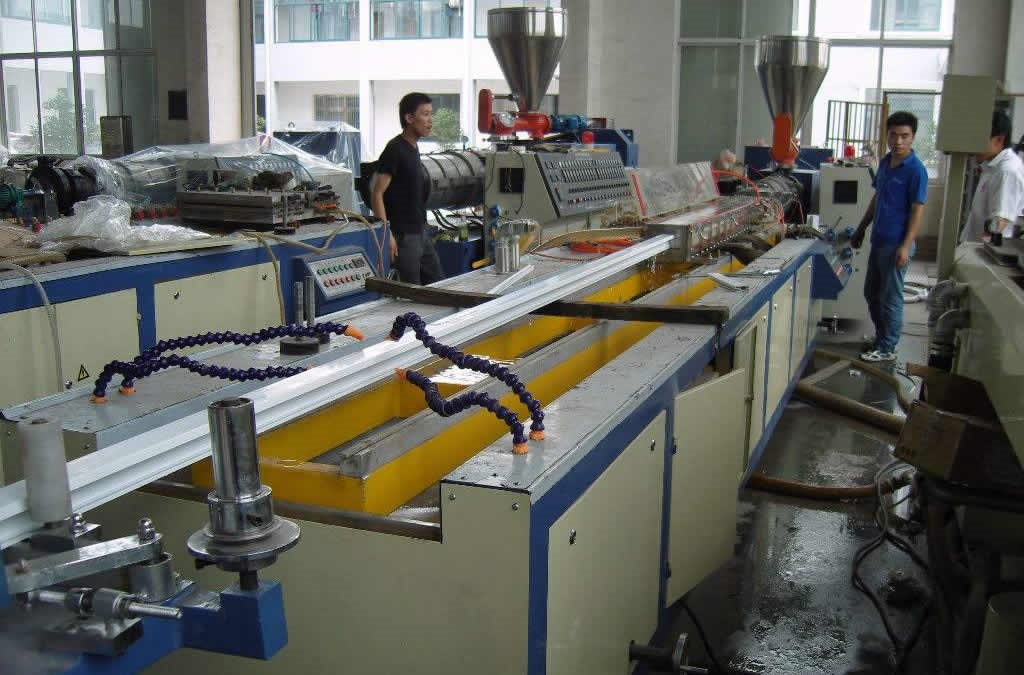
Extrusion entails feeding the material into a heated chamber and pushing it through a die in order to form plastic resin into a continuous profile. The same idea holds true for prototyping: you make a custom die based on the cross-section of your design and generate brief test lengths. Prototype runs are less expensive and require less setup time because extrusion tooling is typically much simpler and less expensive than full-scale molds.
Why It’s A Smart Step Before Full Tooling?
● Validating Flow, Fit & Function
You can observe how plastic passes through the die and cools when you extrude a prototype. This highlights real-world issues like warping, inconsistent wall thickness, and flaws in material flow. Early detection allows you to modify geometry or die design before costly tooling.
● Better Cost-to-Test Ratio
Extrusion prototype tooling is less expensive than full-scale tooling or production injection mold, which can need significant financial outlays. It enables engineers and designers to examine profiles or linear components without going over budget.
● Material & Design Flexibility
Many common thermoplastics, including engineering plastics including PVC, PE, and PP, are supported by extrusion. You can quickly test several resins, surface treatments, or colors to see what works best before committing to tooling.
● Quick Iterations
Extrusion dies are easier to make and alter, which speeds up the process. This enables several rounds of the prototype: test a version, identify a problem, modify, and re-extrude. There are fewer surprises when you go to complete tooling, thanks to that iterative feedback loop.
● Minimising Waste: Both Material & Time
Prototypes are extruded with minimal waste. The process involves constant melting, shaping, and cooling; scrap is frequently reusable. Moreover, identifying a design defect prior to mass production saves weeks or even months that could be wasted on recalls, retooling, or redesign.
Putting It All Together: Why It’s Worth Doing?
Prototyping with plastic extrusion functions as a dress rehearsal for large-scale production. It lowers risk before making a significant investment, allows you to test your design fast and affordably, guarantees that you identify possible defects early, and allows you to experiment with other materials or finishes. Ignoring this phase is like gambling for any project containing linear, uniform cross-sectional plastic parts, and few engineers enjoy placing bets on their first mold run.
Final Takeaway!
Consider plastic extrusion prototyping as a reality check and safety measure. It gives your design a tangible shape, highlights potential problems, and provides an opportunity to improve long before tooling prices skyrocket. Extrusion prototype is a must if you value accuracy, cost management, and seamless manufacturing transitions.
Frequently Asked Questions
What kinds of plastics can I use for
extrusion prototypes?
The majority of common thermoplastics, including PVC,
PE, PP, ABS, and other engineering-grade resins, are extrudable. You can try
various materials before committing to the final product, thanks to this
versatility.
How many prototype parts can extrusion
produce quickly?
Extrusion is continuous, so you can quickly create a
variety of lengths or profiles. You can obtain sufficient samples for
functional testing and validation with even a brief extrusion run.
Can extrusion prototypes match the
final production quality?
Extrusion prototypes offer good representation of
shape, size, and surface finish for uniform-profile parts. However, precision
and tolerance levels may not match those of high-grade molds.
Is extrusion prototyping
cost-effective compared to production injection
mold?
Yes. Tooling is far simpler and cheaper than injection molds, making
extrusion prototyping more affordable, especially when you need only a few test
parts or short runs.
Don't risk your budget on unverified designs. Upload your CAD file today for a professional review of your plastic extrusion prototyping needs.