



A decade ago, building a physical prototype
meant weeks of waiting, enormous budgets, and a frustrating
amount of back-and-forth before you had anything tangible to test. That world
is disappearing fast. Technology has fundamentally changed what's possible in rapid prototyping services- compressing timelines from weeks to hours, reducing costs
dramatically, and enabling levels of precision that were once reserved for
full-scale production runs. Whether you're an engineer, a product designer, or
a startup founder, the tools available today are genuinely game-changing. Read
this guide all the way through- the technologies covered toward the end are the
ones reshaping entire industries right now.
What Are Rapid Prototyping Services?
Rapid prototyping services refer to the professional use of advanced
manufacturing technologies to quickly produce physical models or functional
parts from digital design files. These services allow designers and engineers
to test form, fit, and function early in the development process- catching
problems before they reach expensive full-scale production.
| Technology (技术) | Old Method (传统模式) | Transformation (技术转型后) |
|---|---|---|
| Design Check | Manual Engineering Review | Real-time AI DFM Feedback |
| Prototyping Speed | 5 - 7 Days | 24 - 48 Hours (Rapid-Turn) |
| Material Range | Limited Plastics | Carbon DLS, Multi-Jet Fusion, High-Temp Alloys |
The Technologies Driving the
Transformation
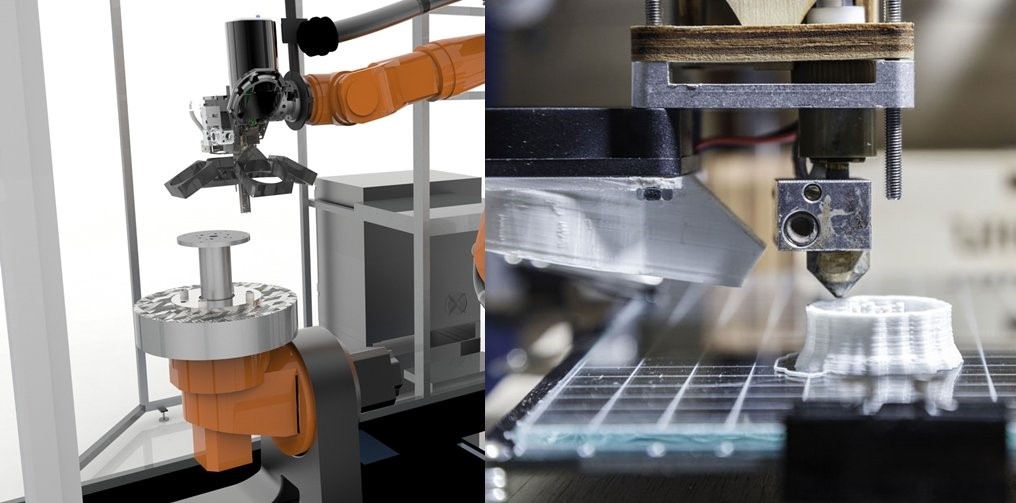
3D Printing Has Moved Far Beyond Basic Plastic Models
Early 3D printing produced fragile, low-resolution models useful
mainly for visual reference. Today's industrial additive manufacturing machines
print in metals, composites, flexible polymers, and biocompatible materials
with exceptional dimensional accuracy. Functional parts that once required
traditional machining are now printed directly, cutting lead times from weeks
to a single day on many projects.
AI-Assisted Design Is Accelerating the Iteration Cycle
Artificial intelligence is now embedded in CAD platforms, suggesting
design optimizations, flagging structural weaknesses before a file is ever sent
to a printer, and generating multiple design variants automatically. What used
to take an engineer several revision cycles now gets resolved in the design
phase itself, saving significant time and reducing material waste per project.
Multi-Material Printing Opens Doors That Didn't Exist Before
Modern prototyping machines can combine multiple materials in a
single print run- rigid and flexible, opaque and transparent, conductive and
insulating. This means a single prototype can accurately simulate the behavior
of a finished product made from multiple components. Engineers no longer need
separate models for each material property they want to test individually.
CNC Machining Has Become Smarter and Far More Accessible
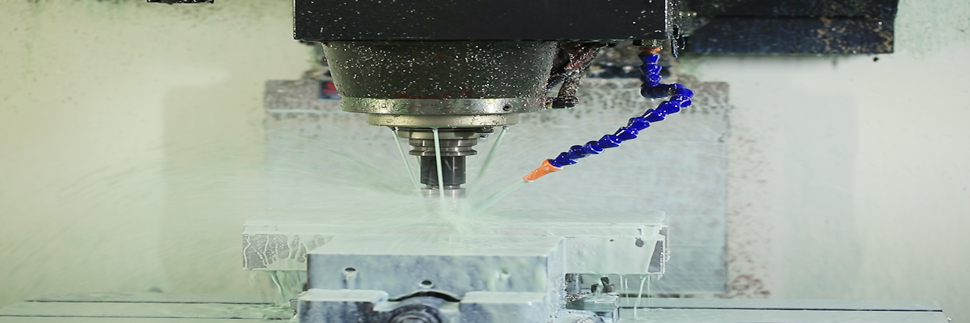
Computer Numerical Control machining has always been precise, but
newer generations of CNC equipment paired with intelligent software have made
the process faster, more repeatable, and accessible to smaller production runs
than before. Complex geometries that previously required multiple setups now
run in a single automated sequence with minimal human intervention between
steps.
Digital Twins Let Engineers Test Before Anything Is Built
A digital twin is a virtual replica of a physical product that
simulates real-world performance under various conditions. Prototyping services
increasingly use digital twin technology to run stress tests, thermal
simulations, and mechanical performance checks in software before committing to
physical production. This eliminates an entire layer of costly physical test
iterations upfront.
Urethane Casting Bridges the Gap Between Prototype and Production
Vacuum casting using urethane resins has become a go-to method for
producing small batches of high-quality prototypes that closely replicate
injection-molded parts. Surface finish, flexibility, and color options have all
improved significantly. For consumer product teams that need presentation-ready
models or investor samples, the output quality today is nearly
indistinguishable from production parts.
Cloud-Based Collaboration Has Removed Geographic Barriers
Prototyping projects no longer require everyone to be in the same
building, city, or country. Cloud platforms allow design teams, engineers, and
service providers to collaborate in real time on shared digital files, review
changes instantly, and approve production without physical meetings. Global
teams now move at the same pace as co-located ones, cutting project timelines
measurably.
Faster Feedback Loops Are Changing Product Development Culture
Technology hasn't just made individual steps faster- it has changed
the entire rhythm of product development. Teams now run more iterations in less
time, test bolder ideas with lower risk, and arrive at better final products
because they can afford to explore more options. The cultural shift toward
rapid iteration is as significant as any single technology behind it.
Where All of This Is Heading
Technology isn't just improving rapid prototyping services-
it's redefining what prototyping means entirely. The line between prototype and
production is blurring, timelines that once spanned months now span days, and
the industries benefiting most are the ones that move fastest. From medical
devices to consumer electronics, the pace of innovation is accelerating because
the tools to test ideas have never been more powerful. In sectors like automotive
injection mold development,
where precision and speed both carry enormous financial stakes, these advances
aren't optional upgrades- they're competitive necessities that separate
industry leaders from the rest.
Frequently Asked Questions
What industries benefit most from modern rapid prototyping services
today?
Medical devices, consumer electronics, automotive components,
aerospace parts, and consumer goods benefit most due to high iteration demands
and strict precision requirements.
How accurate are 3D-printed prototypes compared to traditionally
machined parts?
Industrial 3D printing achieves tolerances as tight as plus or minus
0.1mm on many materials, making them suitable for functional testing across
most engineering applications.
Can rapid prototyping services handle low-volume production runs,
not just single prototypes?
Yes. Many services offer bridge production runs of tens to hundreds
of units using prototyping equipment before full-scale tooling investment is
committed to.
How do I choose between 3D printing and CNC machining for my
prototype project?
Choose 3D printing for complex geometries and faster turnaround.
Choose CNC machining when tighter tolerances, metal properties, or superior
surface finish are primary requirements.
What file format do rapid prototyping services typically require for
submitting designs?
STL and STEP files are most universally accepted. STEP files are
preferred for CNC projects as they retain precise dimensional and geometric
data throughout.
How does AI improve rapid prototyping services?
AI improves the process by predicting manufacturing defects before a single part is made, automating the quoting process, and optimizing toolpaths for CNC machines, leading to faster delivery and lower costs.
At Uidea, technology transformation isn't just about faster machines; it's about the digital thread that connects your CAD data directly to our automated production floors.