



Vacuum Casting China for Prototype and Low-Volume Plastic Parts
UIDEA Rapid Prototype provides Vacuum Casting China services for product development teams that need production-like plastic prototypes, urethane casting parts, clear parts, rubber-like parts and small-batch plastic components. Vacuum casting is a practical process when customers need dozens of high-quality samples before injection molding or full production tooling.
Vacuum casting, also called urethane casting or silicone mold casting, is commonly used for functional prototypes, appearance models, engineering samples, trade show parts and low-volume plastic parts. UIDEA can combine vacuum casting with SLA 3D printing, CNC machining, sheet metal fabrication and rapid tooling when a project needs multiple manufacturing processes.
What Is Vacuum Casting?
Vacuum casting is a rapid prototyping process that uses a master model and a silicone mold to produce multiple polyurethane parts. The master model is usually made by SLA 3D printing or CNC machining, then finished to the required surface quality. Liquid silicone is poured around the master model to create a mold. After curing, polyurethane resin is cast into the silicone mold under vacuum to reduce air bubbles and improve part quality.
This process is useful when a project needs molded-like plastic parts without investing in hard injection mold tooling. It gives customers a fast way to test design, assembly, color, surface finish and functional performance in a small batch.
Vacuum Casting Process
| Step | Details |
|---|---|
| 1. Master model | A master model is made by SLA 3D printing or CNC machining, then finished according to the required surface quality. |
| 2. Silicone mold | Liquid silicone rubber is poured around the master model and cured to create a flexible silicone mold. |
| 3. Mold cutting | The cured silicone mold is carefully opened so the master model can be removed and casting can begin. |
| 4. PU casting | Polyurethane resin is poured into the mold under vacuum to create production-like plastic parts. |
| 5. Finishing | Parts can be trimmed, painted, polished, colored, assembled or finished according to project requirements. |
Vacuum Casting Capabilities
| Capability | Details |
|---|---|
| Small-batch plastic parts | Suitable for low-volume parts before injection molding or market testing. |
| Clear parts | Useful for lenses, covers, light pipes, display models and transparent prototype components. |
| Rubber-like parts | Flexible polyurethane options for seals, grips, soft-touch parts and functional samples. |
| Color matching | Parts can be colored based on project requirements, including Pantone color references when applicable. |
| Large silicone molds | UIDEA is equipped with vacuum casting machines capable of handling parts up to about 1200 x 1000 x 1000 mm, depending on design and material. |
| Typical mold output | A silicone mold can usually produce around 10 to 20 cast parts, depending on part geometry, material and surface requirements. |
Materials for Vacuum Casting
Vacuum casting uses polyurethane materials that can simulate ABS-like, rubber-like, clear, heat-resistant or other production-like properties. Material selection depends on whether the prototype needs strength, transparency, flexibility, impact resistance, heat resistance, appearance quality or assembly performance.
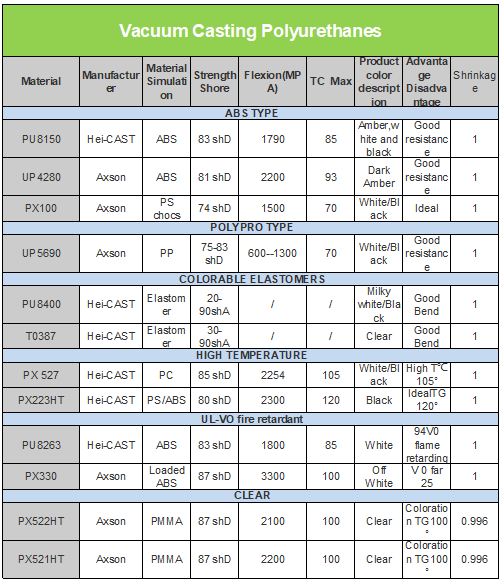
Vacuum Casting Materials
When to Choose Vacuum Casting
Vacuum casting is often chosen when a customer needs more than one prototype but does not yet need steel injection molding tooling. It is also useful when the product team needs molded-like plastic parts for testing, customer demos, pilot runs or early market validation.
- When you need 5 to 100 plastic prototype parts.
- When the part needs a molded-like appearance without hard tooling.
- When you need clear, colored or rubber-like prototype parts.
- When SLA or CNC prototype parts are not enough for low-volume testing.
- When you want to validate a design before injection molding.
Vacuum Casting vs CNC Machining, 3D Printing and Injection Molding
| Process | Best For |
|---|---|
| Vacuum casting | Low-volume production-like plastic parts, clear parts, colored parts and rubber-like prototypes. |
| 3D printing | Fast design iteration, complex geometry and early concept validation. |
| CNC machining | Tight-tolerance metal or plastic functional prototypes and end-use components. |
| Injection molding | Higher-volume production after design and tooling requirements are confirmed. |
Typical Applications
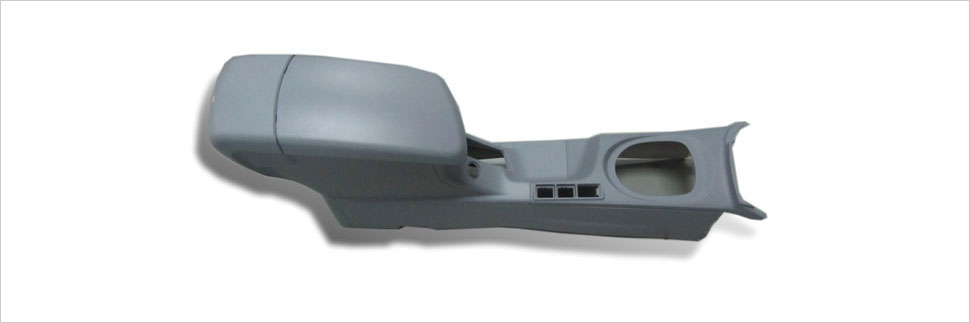
Vacuum casting is used for consumer electronics, medical device prototypes, automotive interior parts, appliance parts, product housings, clear covers, display models, soft-touch parts, seals, gaskets, overmolding samples, marketing models and pilot production parts. It is especially useful for buyers who need several production-like samples for testing and presentation.
Quality and Quotation Requirements
For a vacuum casting quote, customers can send 3D CAD files, 2D drawings if available, quantity, material requirement, color, surface finish, tolerance, assembly requirement and application details. UIDEA will review the design and recommend whether vacuum casting, SLA 3D printing, CNC machining or rapid tooling is the most practical route.
- CAD file and master model review before quotation.
- Material and color recommendation based on application.
- Surface finishing, painting, polishing and assembly support when required.
- Packaging support for international shipping.
Related Services
Vacuum casting often starts with a master model made by SLA 3D printing or CNC machining. If the project later moves toward production, UIDEA can also support rapid tooling and injection molding, sheet metal fabrication and other prototype manufacturing services.
Vacuum Casting FAQ
What vacuum casting services does UIDEA provide in China?
UIDEA provides vacuum casting China services for urethane casting parts, silicone mold casting, clear prototypes, rubber-like prototypes and small-batch plastic parts.
How many parts can one silicone mold make?
A silicone mold usually produces around 10 to 20 cast parts, depending on part geometry, material, surface finish and quality requirements.
What is vacuum casting best for?
Vacuum casting is best for low-volume production-like plastic parts, clear parts, colored parts, rubber-like parts, appearance models and functional prototypes before injection molding.
Is vacuum casting different from injection molding?
Yes. Vacuum casting uses silicone molds and polyurethane materials for small batches, while injection molding uses hard tooling for higher-volume production.
What files are needed for a vacuum casting quote?
Please send 3D CAD files, quantity, material requirement, color, surface finish, tolerance, assembly needs and application details.
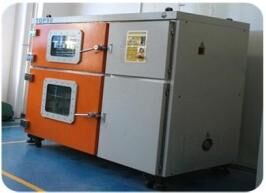 Vacuum Casting Machine
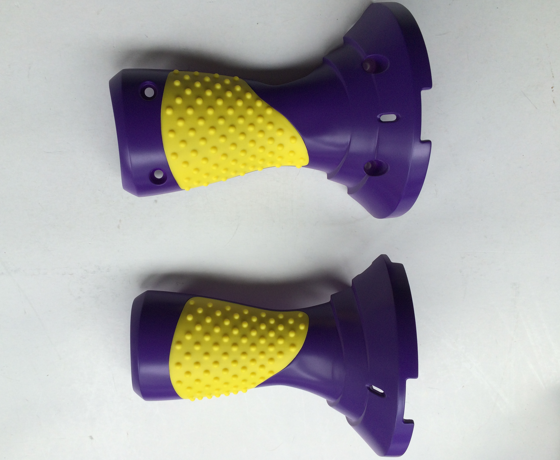 Vacuum Casted Overmolding Products
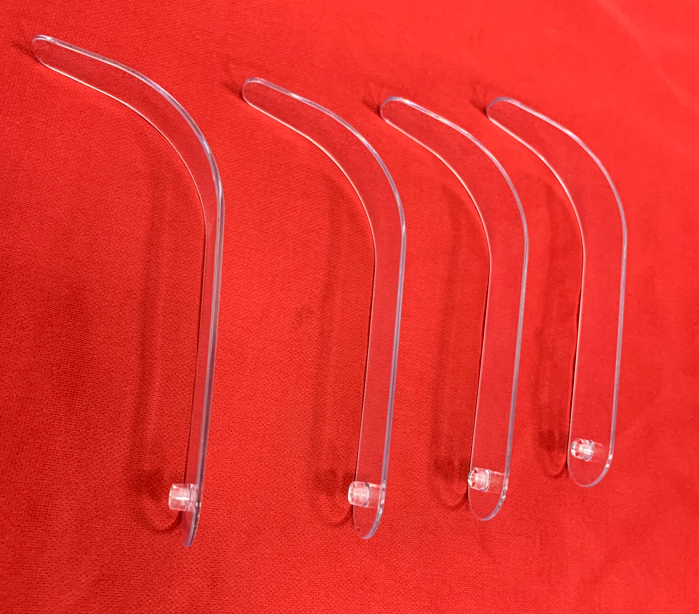 Vacuum Casted Clear Parts
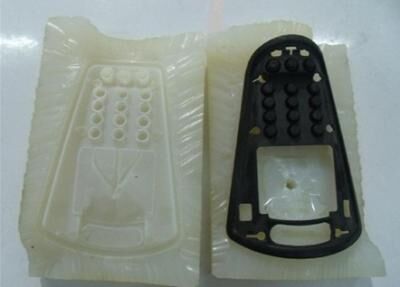 Silicone Mould and Casted Product